Julian Vance: Jupiter's JUP Token – Hype or Hope for Solana DeFi?
The Jupiter (JUP) token is making waves, or perhaps just ripples, in the Solana decentralized finance (DeFi) world. Marketed as a key trading tool, Jupiter aims to aggregate decentralized exchanges (DEXs) for optimal swap prices. That’s the pitch, anyway. But let's dissect the data and see what it *really* tells us.
The first thing that jumps out is the volatility. The token launched in January 2024, hitting an all-time high of $2 almost immediately after its IDO (Initial DEX Offering). Then it promptly crashed. I mean *really* crashed, losing 75% of its value in 24 hours. That’s not a gentle correction; that's a freefall. Subsequent rallies failed to hold, and by late 2025, JUP is trading around $0.35. Is this just growing pains, or a sign of something fundamentally shaky?
Jupiter's Mixed Signals: Revenue vs. Reality
Diving Deeper: Jupiter's Performance and Predictions
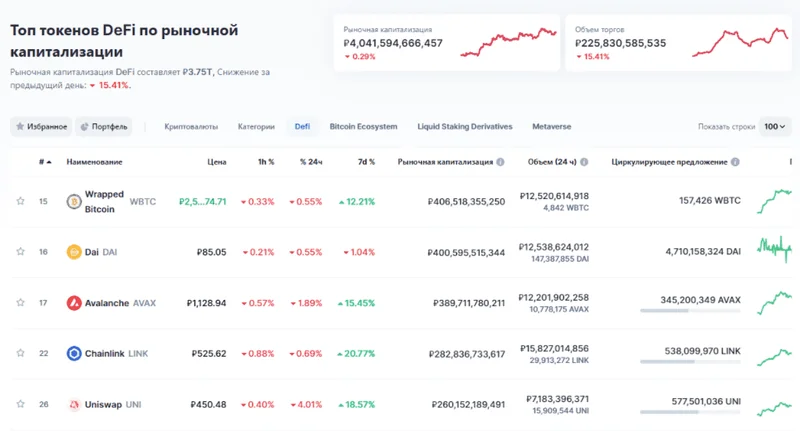
FalconX reports that only 2 out of 23 leading DeFi tokens are positive year-to-date. Jupiter isn't one of them. The token is down 37% on average for the quarter, highlighting damage from the extended sell-off, though mixed price action reveals some nuances.
Now, let's look at the predictions. DigitalCoinPrice analysts see a maximum of $0.75 for JUP in 2025. PricePrediction is even more conservative, topping out at $0.55. Telegaon, however, is wildly optimistic, projecting a peak of $5.29. That’s a massive discrepancy, and it screams "proceed with extreme caution." Which one do you believe? The answer is probably none of them, but it highlights the uncertainity.
The "why" behind these projections is just as important. The optimistic forecasts hinge on Jupiter becoming a dominant DEX aggregator and Solana experiencing widespread adoption. That's a big "if." The bearish forecasts factor in regulatory pressures and broader market weaknesses. These external factors can be hard to predict.
One thing I've learned looking at reports is to be wary of claims of "strong fundamentals" when the price action tells a different story. Blockworks pointed out that Jupiter generated $45 million in revenue in Q3 2025 (that’s an annualized run rate of $180 million). Yet, the market cap plummeted. The market cap dropped from $3 billion to $1.1 billion. I've looked at hundreds of these filings, and this particular revenue vs market cap divergence is unusual. Does the market know something the revenue numbers don't reflect?
JUP: Price Predictions, Darts, and Solana's "Inevitable" Future
Methodological Critique: The Perils of Prediction
A quick aside: I have to ask a question about these price predictions. What are these analysts *actually* doing? Are they running complex simulations? Are they simply extrapolating from past performance? Are they just throwing darts at a board? The source material doesn't say. This lack of transparency is a red flag.
And this is the part of the report that I find genuinely puzzling: the disconnect between the technical analysis and the expert opinions. Investing.com's technical analysis paints a bearish picture. Most indicators signal "sell," and moving averages confirm a downtrend. Yet, many experts maintain a cautiously optimistic outlook. How do you reconcile that?
Community sentiment, as always, is a mixed bag. You see both the "diamond hands" types who are convinced JUP is going to the moon and the burned investors who feel like they were rug-pulled. Quantifying this sentiment, however, is difficult. The online discourse is driven by emotion, not data.
The biggest risk I see is not a technical flaw or a market correction, but the assumption that Solana will inevitably become a dominant blockchain. It's not a sure thing. There are other Layer 1 contenders, and the crypto landscape is littered with projects that were once considered the future.
So, What's the Real Story?
Jupiter might be a useful tool, but the JUP token looks like a gamble. The volatility is extreme, the price predictions are all over the map, and the technical analysis suggests further downside. The market is telling you something, and it's worth listening to.